

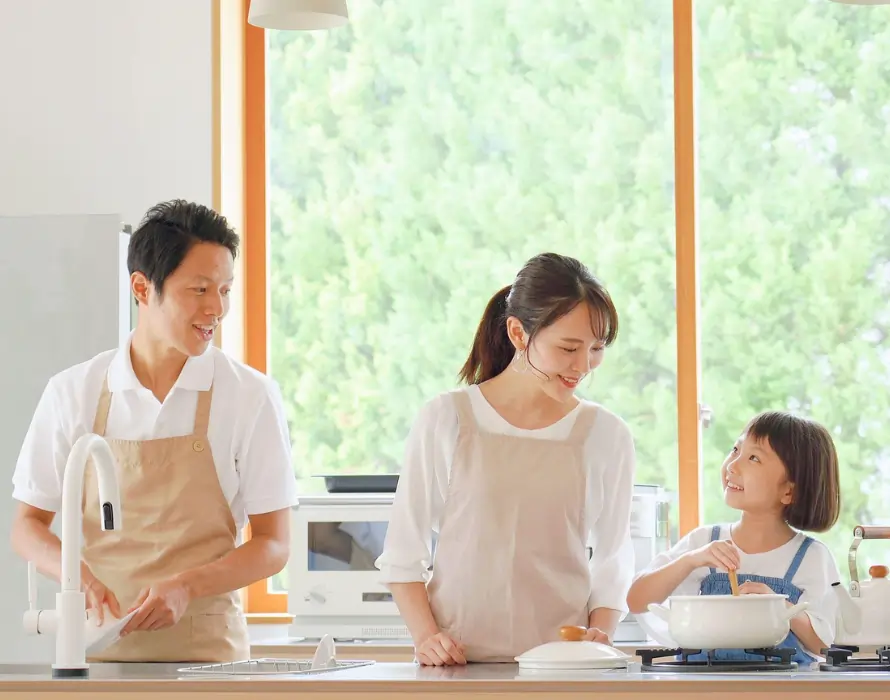
The kitchen is one of the best classrooms your child will ever step into. It’s filled with measurement units, fractions, conversions, weights, volumes, and real-time problem-solving. From scooping flour into a 1-cup measuring cup to converting grams to ounces or doubling a recipe’s ingredients, kids get to experience math in the most practical, delicious way possible.
This guide covers every essential kitchen math skill children need: measuring dry and liquid ingredients, converting between cups, tablespoons, milliliters, grams, and ounces, reading measuring tools, using a scale, calculating time, and even scaling recipes. Every activity uses real food, real measurements, and real math.
Let’s turn your kitchen into a full-scale math lab.
Table of Contents
Understanding Kitchen Measurement Units (The Complete Beginner Guide)
Before kids can cook, they need to understand the basic units used in every recipe.
Dry Measurements (Volume)
- 1 cup = 16 tablespoons
- ½ cup = 8 tablespoons
- ¼ cup = 4 tablespoons
- 1 tablespoon = 3 teaspoons
Dry Measurements (Weight)
- 1 cup flour ≈ 120g
- 1 cup sugar ≈ 200g
- 1 tablespoon flour ≈ 8g
Liquid Measurements
- 1 cup = 240 ml
- ½ cup = 120 ml
- ¼ cup = 60 ml
- 1 tablespoon = 15 ml
- 1 teaspoon = 5 ml
Weight vs Volume
Teach kids the important kitchen rule:
👉 Grams and ounces measure weight; cups and tablespoons measure volume.
Simple Exercise:
Give your child a cup of flour and a cup of water, and let them compare weight using a kitchen scale. This single activity teaches density, weight, and volume instantly.
Kitchen Tools That Teach Math Naturally
- Digital scale (grams, ounces)
- Measuring cups (1 cup, ½ cup, ⅓ cup, ¼ cup)
- Liquid measuring jug (ml scale)
- Timer (minutes, elapsed time)
- Thermometer (temperature)
Fun Kitchen Math Activities For Kids
1. Measuring Ingredients: Fractions, Accuracy, and Math You Can Eat
Let kids measure:
- ¾ cup of oats
- ½ cup yogurt
- 3 tablespoons cocoa
- 2 teaspoons baking powder
As they scoop, ask:
- “How many ¼ cups make 1 cup?”
- “Is ⅓ cup bigger than ¼ cup?”
- “Can you measure ½ cup using only tablespoons?”
Show them that:
- 1 tablespoon = 15 ml
- 4 tablespoons = ¼ cup
- 16 tablespoons = 1 cup
This is fraction math in real time.
2. Using a Kitchen Scale (Grams, Ounces, and Weight Conversion)
Teach your child how to:
- Set the scale to grams
- Set it to ounces
- Zero or “tare” the scale before adding ingredients
- Convert between grams and ounces
- 100 g ≈ 3.5 oz
- 1 oz ≈ 28 g
Example:
Ask children to weigh 120 g of flour. Then ask them to convert it to ounces.
This builds arithmetic and conversion fluency instantly.
3. Liquid Measuring Skills: Reading Cups, Jugs, and ml Markings
Using a measuring jug teaches kids:
- Volume
- Reading scales
- ml measurement
- Pouring control
Activity:
Let them measure:
- 100 ml water
- 250 ml milk
- 500 ml juice
Then ask them to pour until the “meniscus” (curved water line) touches the marking. This is real science and math in action.
4. Recipe Scaling: Doubling, Halving, and Adjusting Yield
Pick a real recipe:
Pancake Base Recipe (Serves 2):
- 1 cup flour
- 2 tablespoons sugar
- 1 cup milk
- 1 teaspoon baking powder
- 1 egg
Ask your child to scale it.
Double (Serves 4):
- 2 cups flour
- 4 tablespoons sugar
- 2 cups milk
- 2 teaspoons baking powder
- 2 eggs
Half (Serves 1):
- ½ cup flour
- 1 tablespoon sugar
- ½ cup milk
- ½ teaspoon baking powder
- 1 egg
Ask questions:
- “If we triple the milk, how many ml is that?”
- “If the recipe needs 3 tablespoons of syrup for 2 people, how much for 6 people?”
Why This Recipe Uses “½ Cup Flour” but Still Uses 1 Whole Egg
When you halve a recipe, most ingredients are easy to divide. Flour, sugar, milk, and even baking powder can all be measured in exact halves. But eggs don’t work the same way, and this is usually the first question kids ask:
“If everything else is half, why isn’t the egg half too?”
The reason is simple: an egg cannot be divided evenly the way numbers can.
Once you crack it open, the white and the yolk mix in uneven amounts. You can’t scoop out an exact ½ portion that keeps the same balance of yolk and white that the recipe needs. And because the egg affects the texture, structure, and fluffiness of the pancake, using an imprecise amount changes the entire result.
That’s why recipes keep the egg whole, even when other ingredients are reduced.
This also answers the next question kids usually have:
“Which ingredients can be halved, and which ones cannot?”
Ingredients like flour, milk, sugar, oil, butter, and even baking powder (when measured carefully) can be halved because they behave predictably—½ always means ½.
But ingredients that are
- too small to divide accurately (like salt or vanilla), or
- not evenly mixed inside (like eggs), or
- very chemically sensitive (like baking soda/powder in tiny amounts)
…don’t halve well at home without changing the final texture.
So the simple rule is:
If an ingredient is easy to measure and behaves the same in every scoop, you can halve it.
If it changes its character when divided—or is too tiny to measure accurately—you keep it whole.
5. Unit Conversions: Cups ⇄ Grams ⇄ Tablespoons ⇄ ml
Common Conversions
- 1 cup flour = 120g
- 1 cup sugar = 200g
- 1 cup butter = 227g
- 1 tablespoon butter = 14g
- 1 teaspoon salt = 6g
- 1 cup = 240 ml
- ½ cup = 120 ml
Kitchen Conversion Formula Examples
- “How many tablespoons in ¼ cup?” → 4
- “How many ml in 3 tablespoons?” → 45 ml
- “How many grams is 2 cups of flour?” → 240g
Let kids build their own conversion chart.
6. Temperature Math: Celsius to Fahrenheit (and Back)
Teach kids the conversion formula:
- °F = (°C × 9/5) + 32
- °C = (°F − 32) × 5/9
Examples:
- 180°C → 356°F
- 350°F → 177°C
Let them compare oven temperatures for cookies vs. bread.
7. Time Math: Timers, Intervals, and Real Cooking Durations
Examples for kids:
- Pasta cooks for 10 minutes → set a timer
- Bread rises for 1 hour → calculate the end time
- Cookies bake for 12 minutes → subtract remaining time
This hits time math, another ranking factor.
8. Sorting, Counting & Categorizing Ingredients
For younger kids:
- Count 10 cherry tomatoes
- Sort beans by color
- Compare the weight of two fruits
This brings in early kitchen math and classification.
9. Fraction Math With Pizza, Sandwiches, and Real Food
Using food makes fractions visual.
Examples:
- 1 pizza → 8 slices
- 2 slices eaten → 2/8 = ¼
- Sandwich cut into triangles → symmetry
Fraction vocabulary appears naturally.
10. Kitchen Geometry: Shapes, Area, Volume & Spatial Reasoning
Teach kids shapes with:
- Round cookies
- Square brownies
- Cylindrical rolling pins
- Rectangular bread
For older kids:
- Estimate the volume of a container
- Compare the surface areas of pans
11. Grocery Budget Math: Cost, Addition, Subtraction, and Unit Price
Give your child a budget of $10 and ask them to:
- Compare the price per gram
- Add total item prices
- Subtract from the remaining budget
This covers cost math and life skills.
Common Measuring Mistakes and How to Fix Them
When cooking, even small measurement errors can change the outcome.
Here are frequent mistakes and the correct way to handle them:
- Confusing weight and volume—Use the correct method for each ingredient. Measure flour and sugar by volume (cups) and liquids like milk by ml or cups.
- Leveling vs. scooping flour—Spoon flour into the cup and level with a knife to avoid packing too much.
- Misreading ml markings—Always check the measuring jug at eye level to pour accurately.
- Miscounting tablespoons—Count carefully and use standard tablespoons.
- Pouring above the line on measuring jugs—Pour slowly and stop at the line for exact amounts.
By showing both the problem and solution, kids can see real-life math in action.
What math concepts do kids learn in the kitchen?
Measurement units, fractions, weight, volume, conversions, geometry, time, ratios, and scaling recipes.
Is weighing ingredients better than using cups?
For accuracy, yes—grams and ounces are more reliable than cups.
What are the most important conversions kids should know?
Cups to tablespoons, grams to ounces, and ml to cups.
At what age can kids start learning kitchen math?
Toddlers can start counting and sorting. By 5–7 years old, they can measure ingredients.
How can I make kitchen math more fun?
Use real recipes, let kids choose ingredients, add timers, include taste tests, and create conversion challenges.
Conclusion: The Kitchen Is the Ultimate Math Classroom
Every recipe is a math problem waiting to be solved.
Whether your child is measuring ½ cup, converting 120 ml, weighing 200g, or doubling a recipe from 2 servings to 4, they are building real-world math skills that matter far beyond school.
Cooking isn’t just delicious — it’s mathematical, practical, hands-on learning.
