

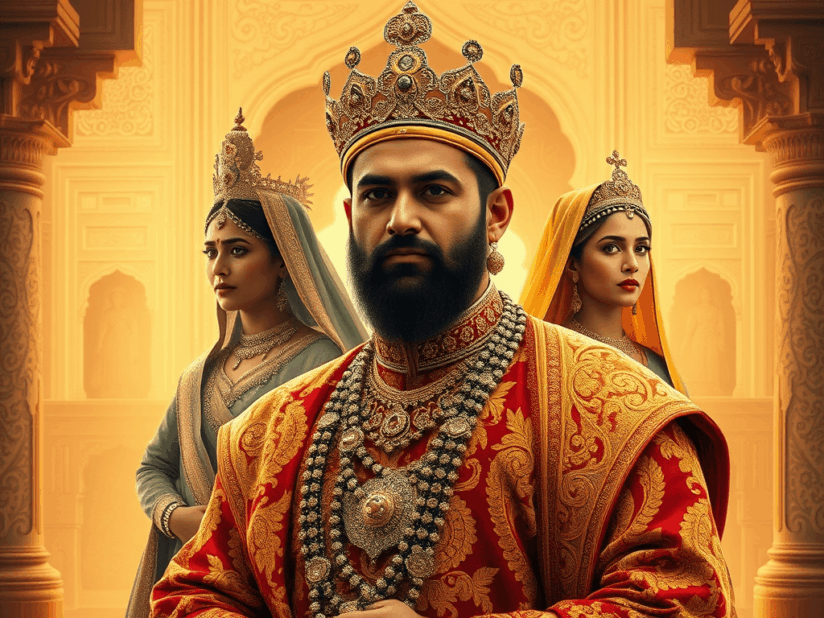
The Timurid Empire was one of the most influential empires of the late medieval world. Founded by Timur, better known in the West as Tamerlane, the empire emerged in Central Asia during the late fourteenth century and rapidly expanded across vast territories stretching from the borders of China to parts of the Middle East and South Asia. At its peak, the empire controlled much of Central Asia, Iran, Afghanistan, and neighboring regions, making it one of the largest political entities of its era.
What makes the Timurid Empire fascinating is that it combined two seemingly contradictory characteristics. On one hand, it was built through relentless military conquest and devastating campaigns that reshaped entire regions. On the other hand, it became a center of remarkable cultural achievement. The cities of Samarkand and Herat transformed into hubs of art, architecture, literature, science, and trade, creating what historians often call the ‘Timurid Renaissance.’
The empire’s influence extended far beyond its own lifespan. Even after its decline, Timurid traditions continued through the Mughal Empire in India, founded by Timur’s descendant Babur in 1526. As a result, the Timurid legacy can still be seen in architecture, scholarship, and political history across a vast portion of Asia. Understanding the Timurid Empire means understanding a crucial chapter in the story of Eurasian civilization.
The Timurid Empire’s influence survived long after its political decline through the Mughal Empire. Since Mughal founder Babur was a direct descendant of Timur, studying the Akbar family tree helps illustrate how the Timurid bloodline continued through successive generations, eventually producing Emperor Akbar, one of the most influential rulers in South Asian history.
Table of Contents
Who Was Timur (Tamerlane)?
Timur’s Early Life and Background
Timur was born in 1336 near Samarkand in Transoxiana, a region that today lies within modern Uzbekistan. He belonged to the Barlas tribe, a Turkicized Mongol group that traced its roots to the broader world created by the conquests of Genghis Khan. Although Timur admired the Mongol legacy and sought legitimacy through connections to the Chagatai line, he was not a direct descendant of Genghis Khan and therefore could not claim the title of Great Khan himself.
The world into which Timur was born was fragmented and unstable. The once-mighty Mongol Empire had splintered into competing states, regional rulers fought for power, and trade routes were vulnerable to disruption. For an ambitious military leader, however, chaos created opportunity. Timur proved exceptionally skilled at building alliances, exploiting rivalries, and assembling a loyal military force.
Historical sources describe him as both a brilliant strategist and a ruthless conqueror. His campaigns became legendary for their effectiveness as well as for their brutality. Entire cities could be destroyed if they resisted him. Yet despite this fearsome reputation, Timur was also deeply interested in state-building and patronage. He envisioned Samarkand not merely as a military headquarters but as the cultural heart of a new empire.
How Timur Came to Power
Timur’s rise to power was rather gradual. Throughout the 1360s, he maneuvered among rival leaders in Transoxiana, forming and breaking alliances when necessary. By 1370, he had emerged as the dominant ruler of the region and established himself as the effective leader of what would become the Timurid Empire.
Unlike other rulers who focused on consolidating their initial gains, Timur immediately began looking outward. He viewed conquest as both a political necessity and a source of prestige. His armies were highly mobile, disciplined, and experienced, allowing him to strike across enormous distances. Campaigns against neighboring territories quickly expanded into massive military operations that reshaped the political map of Eurasia.
What distinguished Timur from many contemporary rulers was his ability to combine nomadic military traditions with sophisticated administrative practices inherited from settled civilizations. This combination enabled him to govern an empire that included diverse ethnic groups, languages, religions, and economic systems. His success laid the foundation for one of the most formidable empires of the medieval era.
Formation of the Timurid Empire
Conquests Across Central Asia
The formation of the Timurid Empire began with the consolidation of Central Asia. Timur secured control over Transoxiana and gradually expanded into surrounding territories. His campaigns targeted rival rulers who threatened his authority or controlled strategically valuable regions. By defeating these opponents, he established a powerful base from which future conquests could be launched.
Central Asia served as the empire’s heartland. The region was economically important because it sat along major trade routes connecting East and West. Merchants traveling the Silk Road passed through cities that generated significant wealth. Control over these routes strengthened Timur’s finances and allowed him to support increasingly ambitious military expeditions.
The conquest process was not simply about territorial expansion. Timur also sought to secure resources, skilled labor, and strategic cities. Craftsmen, scholars, architects, and artisans from conquered territories were frequently relocated to Samarkand, where they contributed to the city’s transformation into a magnificent imperial capital. This policy would later play a major role in the cultural achievements associated with Timurid rule
Expansion into Persia and the Middle East
Once Central Asia was secure, Timur turned his attention toward Persia and the broader Middle East. During the 1380s and 1390s, he launched campaigns that brought large portions of Iran under his control. Major cities, including Isfahan, Shiraz, and Baghdad, experienced Timurid conquest, fundamentally altering the balance of power in the region.
Timur’s ambitions extended even further. One of his most famous victories occurred at the Battle of Ankara in 1402, where he defeated the Ottoman Sultan Bayezid I. This victory temporarily disrupted Ottoman expansion and demonstrated Timur’s military dominance.
The empire that emerged from these campaigns was enormous. Historians estimate that at its greatest extent, Timurid authority stretched across millions of square kilometers. Such a vast realm presented significant administrative challenges, but it also created opportunities for cultural exchange, trade, and intellectual development on an unprecedented scale.
The Timurid Empire at Its Greatest Extent
| Feature | Details |
|---|---|
| Founder | Timur (Tamerlane) |
| Established | 1370 |
| Capital | Samarkand |
| Major Cultural Center | Herat |
| Peak Territory | Central Asia, Iran, Afghanistan, parts of Iraq, Caucasus, Anatolia, and South Asia |
| Successor State | Mughal Empire (through Babur) |
Geographic Reach and Major Territories
At its height, around the time of Timur’s death in 1405, the empire was one of the largest land empires in the world. Its territories included much of present-day Uzbekistan, Turkmenistan, Tajikistan, Afghanistan, Iran, and significant portions of neighboring regions. The empire also exerted influence across the Caucasus, Mesopotamia, and parts of northern India.
This geographic diversity brought immense advantages. Different regions contributed agricultural products, manufactured goods, skilled labor, and commercial connections. Trade networks linked the empire to China, India, the Middle East, and Europe, creating economic opportunities that benefited major urban centers.
The sheer scale of the empire also made it difficult to maintain. Communication across such vast distances was slow, local elites often pursued their own interests, and succession disputes threatened stability. These structural challenges would eventually contribute to the empire’s decline, but during its peak, they were overshadowed by the extraordinary achievements of Timurid leadership.
Key Cities of the Empire
Samarkand
Samarkand was the jewel of the Timurid Empire. Timur invested enormous resources into transforming the city into a symbol of imperial power and cultural sophistication. Magnificent mosques, palaces, gardens, and public buildings turned Samarkand into one of the most impressive cities of the medieval world. Scholars, architects, artists, and craftsmen from across Eurasia were brought there to contribute to its development.
The city’s location along important trade routes further enhanced its prosperity. Merchants carried goods, ideas, and technologies through Samarkand, making it a crossroads of civilizations. The city’s influence extended beyond commerce, becoming a center for scholarship and scientific inquiry that attracted intellectuals from distant regions.
Herat
While Samarkand served as the political heart of the empire, Herat emerged as a major cultural capital. Under Timurid rulers, especially Shah Rukh and his successors, Herat became renowned for its artistic achievements, libraries, schools, and literary culture. Historians often describe it as one of the greatest centers of Persian civilization during the fifteenth century.
The city’s workshops produced exquisite manuscripts, miniature paintings, and decorative arts. Poets, historians, and scholars flourished under royal patronage. Herat’s cultural influence extended throughout the Islamic world, helping to shape artistic traditions that continued long after Timurid political power faded.
Government and Administration
Provincial Governance
The Timurid Empire was too large to be governed directly from a single city. To address this challenge, Timur appointed family members and trusted associates as governors of major provinces. These officials exercised considerable authority while remaining theoretically loyal to the central government.
This system offered flexibility and allowed local conditions to be taken into account. At the same time, it created long-term risks. Powerful governors often developed independent ambitions, particularly after Timur’s death. The resulting rivalries contributed to the fragmentation of the empire and the emergence of competing Timurid states.
Despite these challenges, the administrative structure helped maintain order across diverse territories. Local customs and traditions were often respected, allowing different populations to coexist within the broader framework of imperial rule. This pragmatic approach helped the empire function despite its enormous size and complexity.
Trade and Economic Policies
Economic prosperity depended heavily on trade. The Timurids benefited from their control over key Silk Road routes, which connected East Asia, Central Asia, the Middle East, and Europe. Merchants transported textiles, spices, precious metals, ceramics, and other valuable goods through Timurid territory.
Timurid rulers invested in infrastructure, markets, and urban development. Under later rulers such as Shah Rukh, efforts were made to restore economic stability and repair damage caused by earlier wars. Agricultural production improved, irrigation systems were repaired, and commercial activity expanded.
These economic foundations supported the flourishing cultural environment for which the empire became famous. Wealth generated through trade and agriculture funded architectural projects, educational institutions, artistic workshops, and scientific research. The economy was therefore closely connected to the broader achievements of the Timurid Renaissance.
Military Power of the Timurids
Army Organization
The Timurid Empire was built through military excellence, and its army was among the most effective fighting forces of the late medieval period. Timur inherited many military traditions from the Mongols while adapting them to suit the realities of his own era. His forces relied heavily on highly mobile cavalry units capable of moving rapidly across enormous distances. These horsemen could strike unexpectedly, withdraw before an enemy could react, and return with devastating force. Such mobility allowed Timur to campaign simultaneously across multiple regions and overwhelm opponents who struggled to coordinate their defenses.
Timur placed great emphasis on discipline, intelligence gathering, and strategic planning. Before launching major campaigns, scouts collected information about enemy strengths, weaknesses, terrain, and supply routes. This preparation often gave Timurid armies a decisive advantage before battles even began. Commanders were selected for their loyalty and competence, ensuring that military operations remained coordinated despite the empire’s vast size.
Another important aspect of Timurid warfare was psychological intimidation. Timur understood that fear could be as powerful as military force. Cities that surrendered peacefully were often spared, while those that resisted could face severe punishment. Reports of these actions spread rapidly across neighboring territories, causing some opponents to surrender without a fight. Although controversial and brutal, this strategy reduced resistance and enabled Timur to expand his empire at an astonishing pace.
Major Military Campaigns
Timur’s military campaigns stretched across much of Eurasia and remain among the most remarkable conquests in history. He defeated rival powers in Central Asia before turning his attention toward Persia, the Caucasus, Mesopotamia, India, and Anatolia. Each campaign expanded his influence and reinforced his reputation as one of the era’s most formidable military leaders.
One of the most famous expeditions was the invasion of northern India in 1398. Timur’s forces captured Delhi after defeating the Delhi Sultanate’s armies. The campaign brought immense wealth back to Samarkand and demonstrated the reach of Timurid military power. Although Timur did not attempt to permanently occupy India, the invasion left a lasting impact on the region’s political landscape.
Equally significant was the Battle of Ankara in 1402, where Timur confronted the rapidly expanding Ottoman Empire. The defeat and capture of Ottoman Sultan Bayezid I temporarily halted Ottoman expansion and shocked contemporary observers across Europe and the Islamic world. Few rulers could claim victories against so many different opponents across such vast distances. These campaigns cemented Timur’s place among history’s greatest conquerors and ensured that the Timurid Empire would become a major force in world affairs.
The Timurid Renaissance
Art, Architecture, and Literature
Although the Timurid Empire was born through conquest, its most enduring achievements may have been cultural rather than military. Historians frequently refer to the fifteenth century as the Timurid Renaissance, a period during which art, architecture, literature, and scholarship flourished under royal patronage. The empire became a center of creativity that rivaled many of the world’s greatest civilizations.
Timurid architecture remains particularly famous. Massive domes covered in blue and turquoise tiles, elegant minarets, intricate geometric patterns, and grand religious complexes transformed cities such as Samarkand and Herat. Buildings commissioned by Timur and his successors combined influences from Persian, Central Asian, and Islamic traditions to create a distinctive architectural style. Many of these monuments still stand today and continue to attract visitors from around the world.
Literature also thrived during this period. Persian became the dominant language of high culture, and poets, historians, and scholars received generous support from Timurid rulers. Libraries expanded, manuscripts were copied and illustrated, and intellectual life flourished. The resulting artistic achievements influenced neighboring regions for centuries and helped shape the cultural foundations of later empires, including the Mughals.
Science and Astronomy Under Ulugh Beg
Among the most remarkable figures of the Timurid era was Ulugh Beg, a grandson of Timur. Unlike many rulers whose primary interests centered on warfare, Ulugh Beg developed a passion for science, mathematics, and astronomy. His reign demonstrated that the Timurid Empire valued intellectual achievement as well as military success.
Ulugh Beg established one of the most advanced observatories of the fifteenth century in Samarkand. Scholars working there conducted detailed astronomical observations and compiled highly accurate star catalogs. Their measurements surpassed many earlier works and remained valuable for generations. The observatory became a symbol of scientific excellence and attracted researchers from across the Islamic world.
The achievements of Ulugh Beg illustrate the intellectual vibrancy of the Timurid Renaissance. While Europe was entering the early stages of its own Renaissance, scholars in Central Asia were making important contributions to astronomy, mathematics, and education. These accomplishments challenge simplistic views of medieval history and highlight the interconnected nature of global intellectual development.
Decline and Fall of the Timurid Empire
The death of Timur in 1405 marked a turning point in the empire’s history. Like many states built around the leadership of a single extraordinary individual, the Timurid Empire struggled to maintain unity after its founder’s death. Timur had conquered vast territories, but he had not created a stable succession system capable of preventing internal conflicts among his descendants.
As different branches of the Timurid family competed for power, the empire gradually fragmented. Regional governors and princes established their own centers of authority, often prioritizing local interests over imperial unity. Civil wars weakened the state’s ability to defend its borders and maintain control over distant provinces. Although some Timurid rulers continued to patronize culture and scholarship, political stability steadily declined.
External threats compounded these internal problems. Emerging powers such as the Uzbeks expanded into Central Asia, while other regional states challenged Timurid authority. By the late fifteenth century, much of the empire had been lost. The final major Timurid territories in Central Asia eventually fell to Uzbek forces, bringing an end to the empire as a dominant regional power.
Yet decline did not mean disappearance. Timurid traditions survived through descendants who carried their heritage into new regions. The most famous of these descendants was Babur, whose achievements would give the Timurid legacy a new life in South Asia.
Legacy of the Timurid Empire
The legacy of the Timurid Empire extends far beyond the dates of its existence. Politically, the empire demonstrated how a Central Asian power could unite vast territories stretching across multiple cultural and geographic zones. Militarily, Timur’s campaigns influenced strategic thinking and shaped the development of states across Eurasia.
Culturally, the empire’s impact was even greater. Timurid architecture inspired later Islamic architectural traditions, including many of the masterpieces constructed by the Mughal Empire. The emphasis on scholarship, literature, and artistic patronage created a cultural environment whose influence reached from Central Asia to India and the Middle East.
Perhaps the most important continuation of Timurid heritage came through Babur, a direct descendant of Timur who founded the Mughal Empire in 1526. The Mughals adopted many Timurid traditions, including architectural styles, administrative practices, literary culture, and concepts of kingship. Iconic monuments such as the Taj Mahal ultimately owe part of their artistic heritage to Timurid innovations developed generations earlier.
Today, historians view the Timurid Empire as a bridge between the Mongol world and the early modern Islamic empires that followed. Its achievements in governance, culture, architecture, and science continue to attract scholarly attention. Far from being merely a military empire, it was a civilization that left a lasting imprint on world history.
Final Words
The Timurid Empire stands as one of history’s most fascinating and influential states. Founded by Timur in 1370, it rose from the heart of Central Asia to dominate vast regions stretching across Eurasia. Through military brilliance, strategic leadership, and relentless ambition, Timur forged an empire that reshaped the political landscape of the medieval world.
What makes the Timurids truly remarkable, however, is the contrast between conquest and creativity. While the empire expanded through warfare, it also became a center of extraordinary cultural achievement. The magnificent architecture of Samarkand, the intellectual life of Herat, and the scientific work of Ulugh Beg demonstrate the depth and sophistication of Timurid civilization.
Although political fragmentation eventually led to the empire’s decline, its influence survived through successor states and cultural traditions. The Timurid Renaissance enriched the Islamic world, while the Mughal Empire carried Timurid heritage into a new era. Centuries later, the achievements of the Timurids remain visible in art, architecture, scholarship, and historical memory, securing their place among the great empires of world history.
