

Surviving Leap 9: A Parent’s Guide
As children grow, they pass through distinct developmental stages known as leaps. These leaps represent shifts in cognitive, emotional, and physical abilities. Read more about these leaps in this blog. One of the most challenging leaps for both children and parents is Leap 9, which typically occurs around the 14-month mark. Understanding the complexity of…
Top Creative Ways to Foster Critical Thinking in Homeschooling Children
Homeschooling offers parents a unique opportunity to cultivate a learning environment tailored to their child’s needs. One of the most essential skills that can be fostered through homeschooling is critical thinking, which empowers children to analyze information, solve problems, and make decisions independently. Below, we will explore various creative methods to build and strengthen critical…
Books and Games To Help Your Child Learn About Object Permanence
Object permanence is a foundational concept in early cognitive development that plays a critical role in how children understand the world. It refers to a child’s ability to recognize that objects continue to exist even when they are not directly visible, audible, or otherwise detectable. This skill, first introduced by Swiss psychologist Jean Piaget in…
The Art of Parenting: Finding Your Style
Parenting is an art that involves balancing love, discipline, and the nurturing of independence. The way parents interact with and guide their children varies across cultures, societies, and individual preferences. Parenting styles influence a child’s emotional, social, and cognitive development, and different approaches offer varying results depending on the unique needs of each child. In…
Why Children Love Spinning Objects: Understanding the Rotation Schema
If you’ve observed your child repeatedly spinning objects or twirling their body, you’re witnessing behavior that likely aligns with the rotation schema—one of several schemas that describe patterns of repetitive play and exploration in young children. If you’d like to know more about different schemas, read this article. Schemas are core components of early childhood…
Homeschooling on the Go: India Edition
Traveling while homeschooling provides an immersive educational experience, allowing children to learn about the world firsthand. India, with its rich history, diverse culture, and stunning landscapes, is an ideal destination for travel-based homeschooling. In this detailed guide, we will explore various places across India where you can teach your child different subjects. We’ll also discuss…
What Triggers Separation Anxiety in Children? Learn the Signs
Separation anxiety is a natural part of a child’s emotional and psychological development. It is marked by distress when a child is separated from their primary caregiver. While some level of separation anxiety is expected and healthy, in some cases, this anxiety can become extreme or prolonged, leading to Separation Anxiety Disorder (SAD). This guide…
Cultivate Fast Thinking | Games for Kids’ Brainpower
Introduction to the Two Systems of Thinking Thinking is an essential part of human cognition, and it plays a pivotal role in how we navigate the world, solve problems, and make decisions. Psychologists and researchers, notably Daniel Kahneman, have identified two distinct systems of thinking: System 1 and System 2. These two systems complement each…
60 unique and creative storylines for Fortunately-Unfortunately Game
In our previous blog, we explained how to play the ‘Fortunately-Unfortunately’ game. In this post, we’re excited to share storylines for you to explore. 1. Space Mission Gone Wrong 2. Treasure Hunt Adventure 3. The Accidental Invention 4. The Vacation Mishap 5. Superhero School 6. The Big Promotion 7. The Time Travel Experiment 8. The…
Teaching Pi: A Fun Learning Experience for Kids
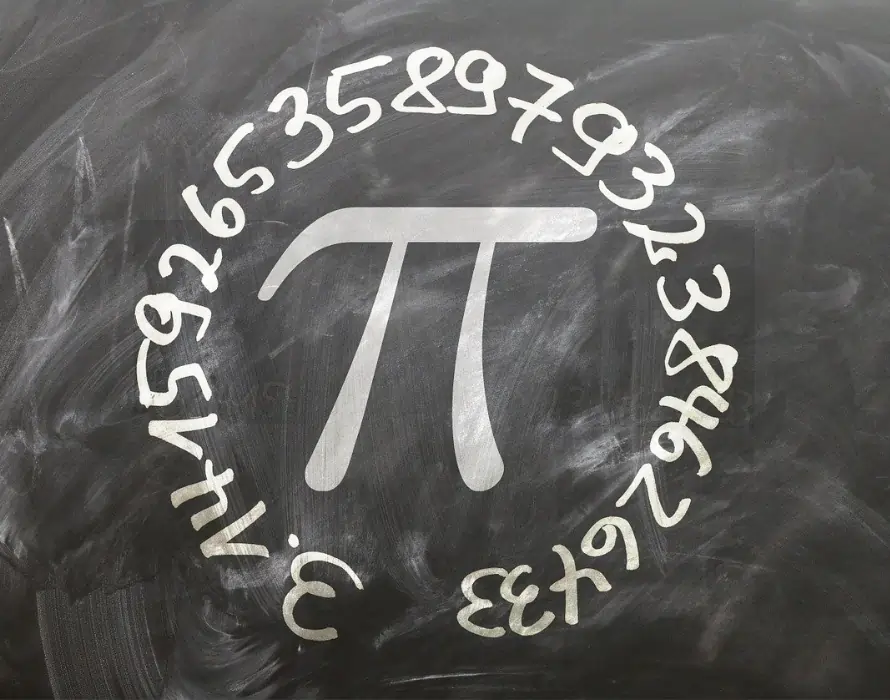
Pi (π) is one of math’s most fascinating ideas—it’s the number that tells us how a circle’s size relates to the distance around it. This number is so vital to our understanding of geometry and physics that it has captivated mathematicians and scientists for millennia. While most people know pi as 3.14, its history reveals…







About

As a new parent and SEO expert, I’m blending my passion for both worlds to help parents navigate the digital space. Whether it’s parenting tips or making your online presence pop, I’m here to support the journey!
Recent Post
- The Ultimate Guide to Anne Frank Books: Every Biography, Memoir, Diary, Movie & TV Series
- Timurid Empire: The Rise, Glory, and Legacy of Central Asia’s Great Conquerors
- Chaos Theory: Understanding the Science Behind Unpredictable Systems
- The Complete History of The Stuart Dynasty
- Cognitive Maps: The Hidden Mental GPS That Shapes Memory, Learning, and Decision-Making